

Practice Notes are reflections from working artists sharing strategies for sustaining a practice under real-world conditions. This may include time management, collaborating with non-human forces, maintaining vitality during slow periods, collective care economies, pricing work, or navigating scarcity.

Jen de los Reyes—whose studio profile was published earlier this year—shares personal journal entries that coincide with her work at Garbage Hill Farm and LAND. These day-to-day musings are filled with references to the artist’s inspirations while providing thoughtful reflections on how one cultivates creative practice and place-making in a tumultuous world.
One of the major influences for this piece is Linda Montano’s book Art in Everyday Life. Art and life are inextricably linked, and in this book she shows that intimacy. For each project she shares the description of the work that you would see commonly circulated professionally in the art world, and then next to that she shares a much more personal narrative that explains what situations in her life led her to produce the work. This contribution to Practice Notes will take a similar approach.
I am focusing on two of my most recent projects, Garbage Hill Farm and LAND. I am experimenting with a way of sharing these that not only shows the outward-facing broad overviews but also reveals my perspective on the ground by interspersing daily records from both projects. I didn’t think these notes and personal photos would have a purpose other than to log what I was learning and observing, but now I see each brief reflection as a seed. These entries are about the time and care it takes to grow something. It is about both the unglamorous tending and revealing the work behind the polished description and documentation of a project.
Garbage Hill Farm, a project currently on hiatus, was an artist-led urban farm I founded on a post industrial corridor in Chicago, Illinois, committed to food justice and sovereignty by increasing local food access with a focus on community-sustained agriculture, redistribution of food to neighbors, and donating fresh produce to local food pantries.
The project modeled what is possible on a residential lot in an urban center.
We ran a twelve member CSA and donated fresh produce to local food pantries weekly throughout our growing season, donating between 500–900 pounds of food annually. We used solar energy and practiced organic regenerative farming, closed-loop production, and the elimination of single-use plastics in distribution. The farm encouraged community foraging and self-production through a publicly accessible micro-orchard with thirty-nine fruit and nut trees—enough trees to qualify as an official level-one arboretum. There is a restored prairie for pollinators, a self-harvest mutual aid garden, and a free seed library with over fifty seed varieties that reflect the backgrounds of the gardeners of the neighborhood.
This is usually the point where the public-facing description of the project ends, but I am now going to share a selection of excerpts from my journals interspersed with personal photos that show some of what went into making this work possible.
April 2, 2021
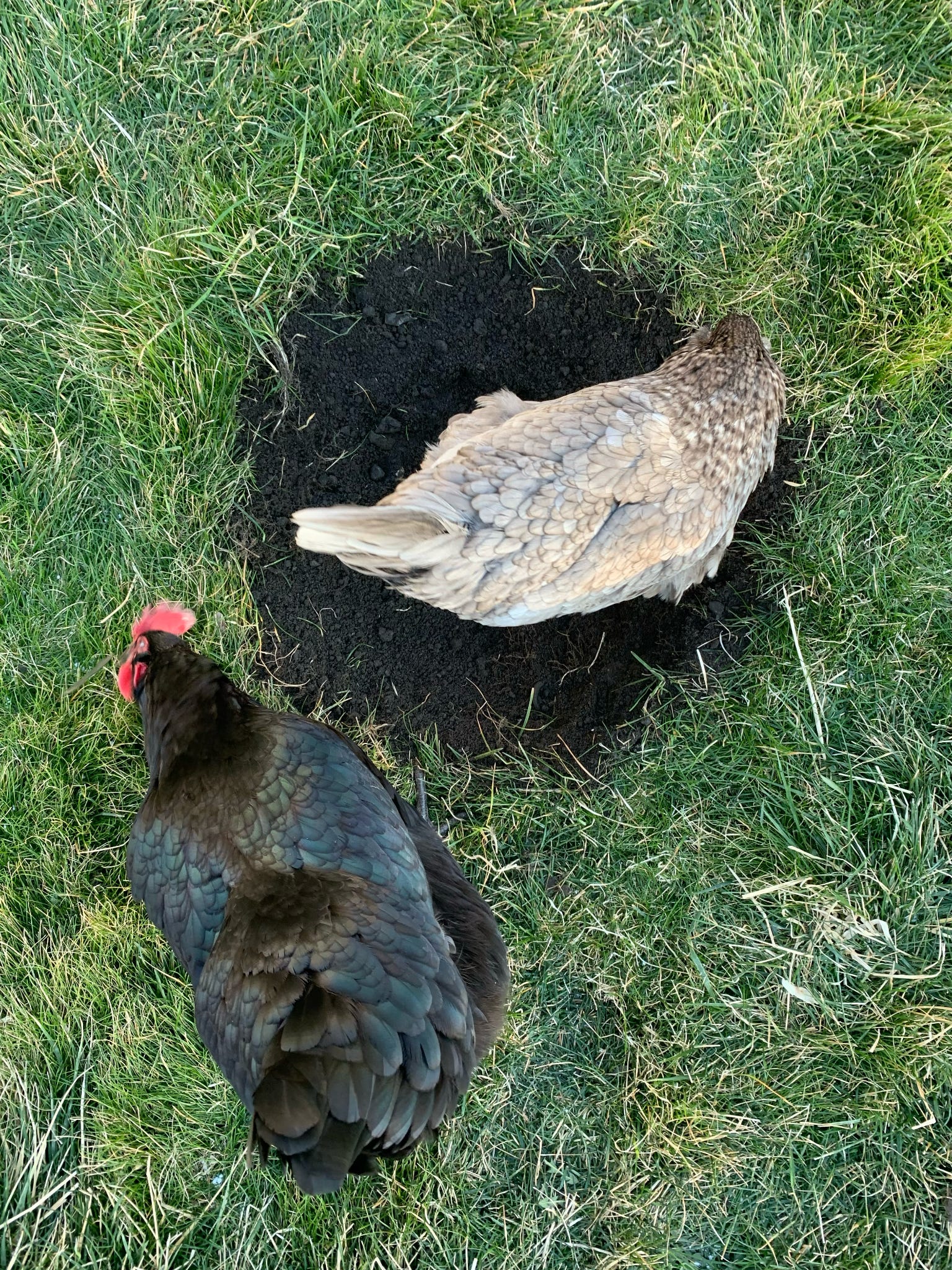
Before I began my “official” workday I cut a circle out of the earth so that later I could plant another pecan tree. In the circle of newly opened ground, chickens unearthed riches. Yesterday a cherry tree was planted, and her partner will go into the ground next to her tonight. I didn’t know until recently that some trees need partners in order to bear fruit. Some are able to fruit alone. A mulberry tree. I planted one yesterday.
These trees are part of my retirement plan. I imagine an old age baking pies with the fruit and nuts they provide. By that point, the five foot tall tree that I planted today could be seventy feet tall.
Trees make me think differently about time, growth, productivity, and partnerships.
May 25, 2021
Today I was asked by Randy, one of the neighborhood kids, what was the first thing I ever planted?
Answer: a stolen red begonia.
When I was about ten or eleven I stole a red begonia from a neighbor’s yard, not just picking the bloom, but digging up the entire plant with my bare hands to transplant into my front yard. My family moved a lot when I was kid. We moved eighteen times in twenty-two years because of housing insecurity, so planting gardens was never an activity that we were able to engage in but clearly something I gravitated toward even then.
September 19, 2021
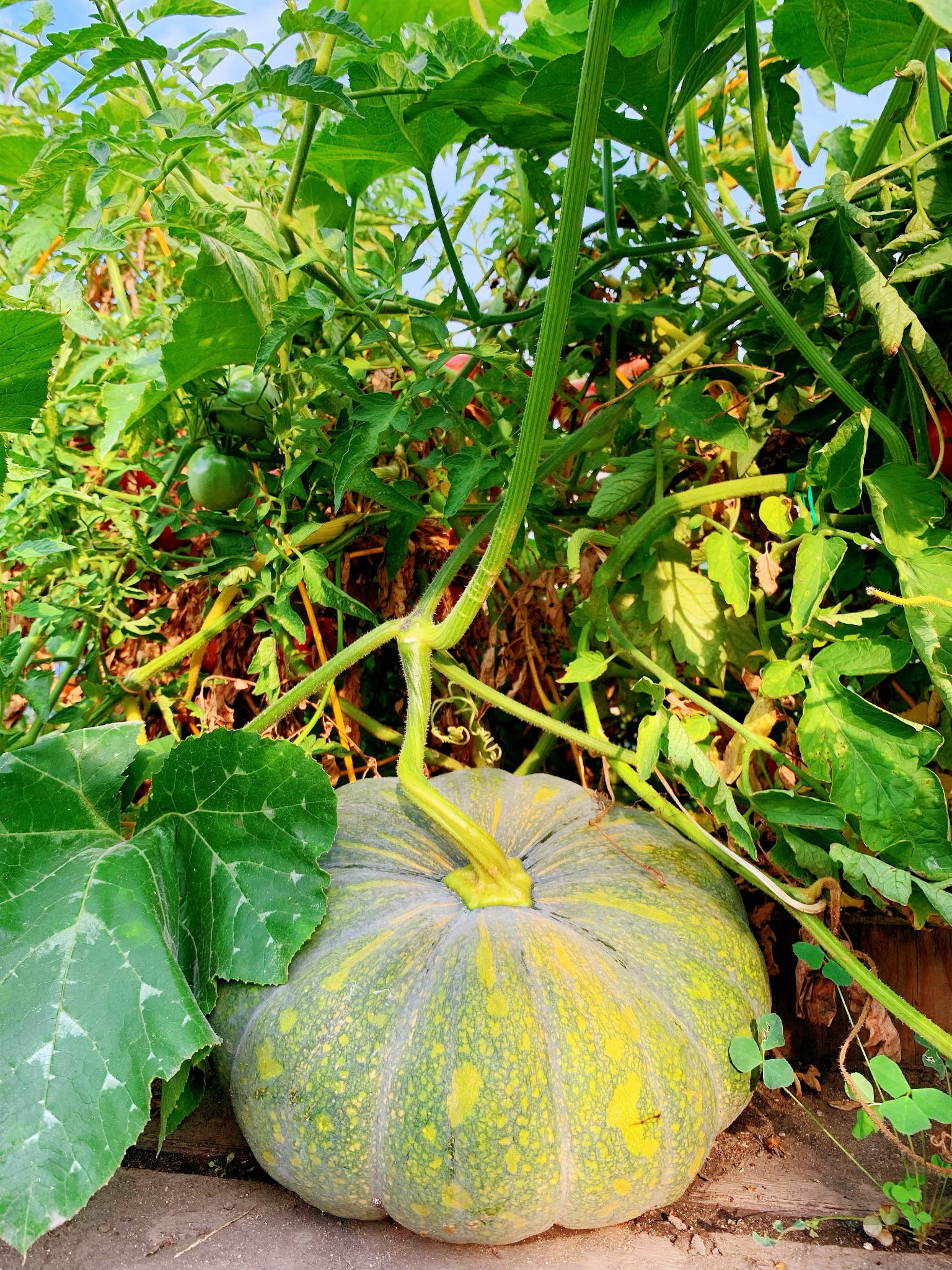
In the golden hour I saw a pumpkin poking through the squash leaves and thought it was so beautiful.
It is growing in the plot where I planted Asian heritage vegetables in the Three Sisters method. This indigenous method of planting grows corn, squash, and beans together for the ways they feed the soil, providing each plant with what it needs to thrive, as well as for how they support each other physically, with the beans wrapping and climbing up the tall stalks of corn and the squash meandering around the planted mounds offering ground cover and weed suppression. My planting used Japanese Hulless Corn, Chinese Red Noodle Yardlong Beans, and different varieties of Korean pumpkins and Japanese squash.
September 21, 2021
“A good part of agriculture is to adapt one’s work to nature….To live in right relation with his natural conditions is one of the first lessons that a wise farmer or any other wise man learns.”
My choice to farm in some ways is to adapt to my own nature, my own rhythm. Long before I started growing food I kept farmer’s hours, so this feels right.
Lately I have had many people comment on how much “practical knowledge” I have in relation to my current connection to agriculture and animal husbandry. This feels like an achievement in an academic career where I always espoused theory put into practice and knowledge being out in the world. This feels like a fitting place for me to have landed.
Even nearing the end of September the tomatoes are still going strong, as are many other of the summer crops. I had planned to change over the plots much earlier, but climate change is prolonging the growing season. It is also making it harder to know when to plant certain finicky crops for this region that tend to bolt when the temperature is too warm, like broccoli and some other brassicas.
I am meeting with my climate crisis collective/support group How’s the Weather tonight; I will be sure to report how this has impacted the growing season.
November 24, 2021
I am finding it hard to believe that over a month has passed since my last entry. I have found it challenging to find a rhythm in which this writing and reflection practice is not a struggle. I think I am realizing it is early morning, first sun-sight, that makes the most sense with my days. The term “sun-sight” comes from Buckminster Fuller and is an attempt to correct language that goes against what we know to be true. The sun does not rise and set; we are turning around the sun and there are parts of the day where it is felt and parts it is not. He used the terms “sun-sight” and “sun-clipse” to more accurately describe this.
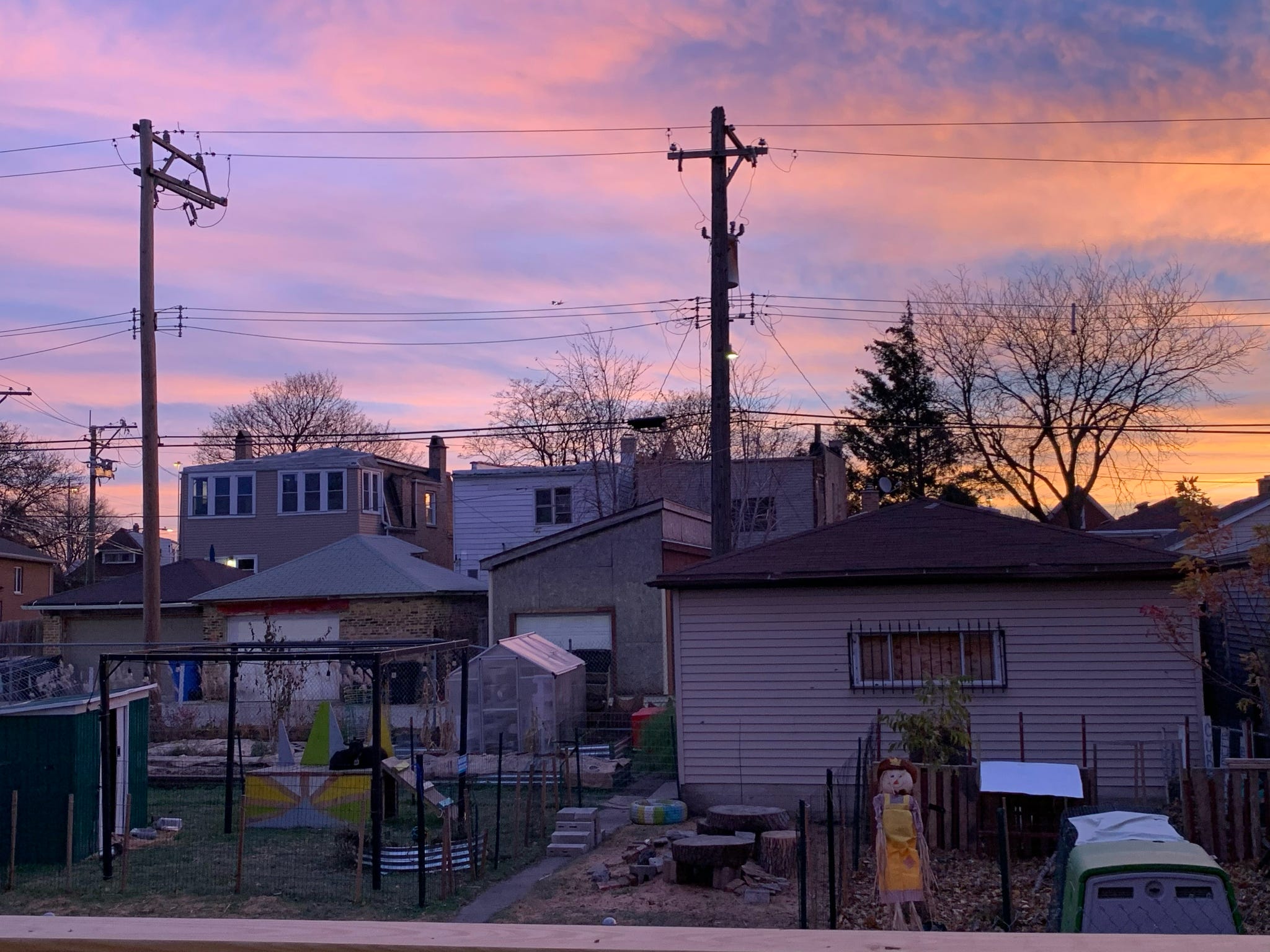
Much has happened in the past weeks. October 31 marked the last day of the growing season for Garbage Hill Farm, which was celebrated with a holiday market. I look forward to this being an annual tradition. The raised beds have been prepared for winter with cover crops and dressed with compost and coffee chaff. This was year one of re-wilding the front parkway and the prairie grasses and plants have been cut back for the winter to promote new growth in spring.
There has been a lot of reconfiguring of the animal spaces. The goat yard has been moved and their shed prepared for winter, a rooster yard had to be created, and a new hen yard. The compost system that was in place in the back alley and some of the prepared stored compost was stolen, so a new series of compost systems had to be created within the fence line.
There is more I am certain, but those are seeds that didn’t take root. I am trying not to feel as though this lapse in writing was a failing on my part, but instead that there need to be moments where we go fallow in order to restore ourselves and to allow space for realization and emergence.
-------
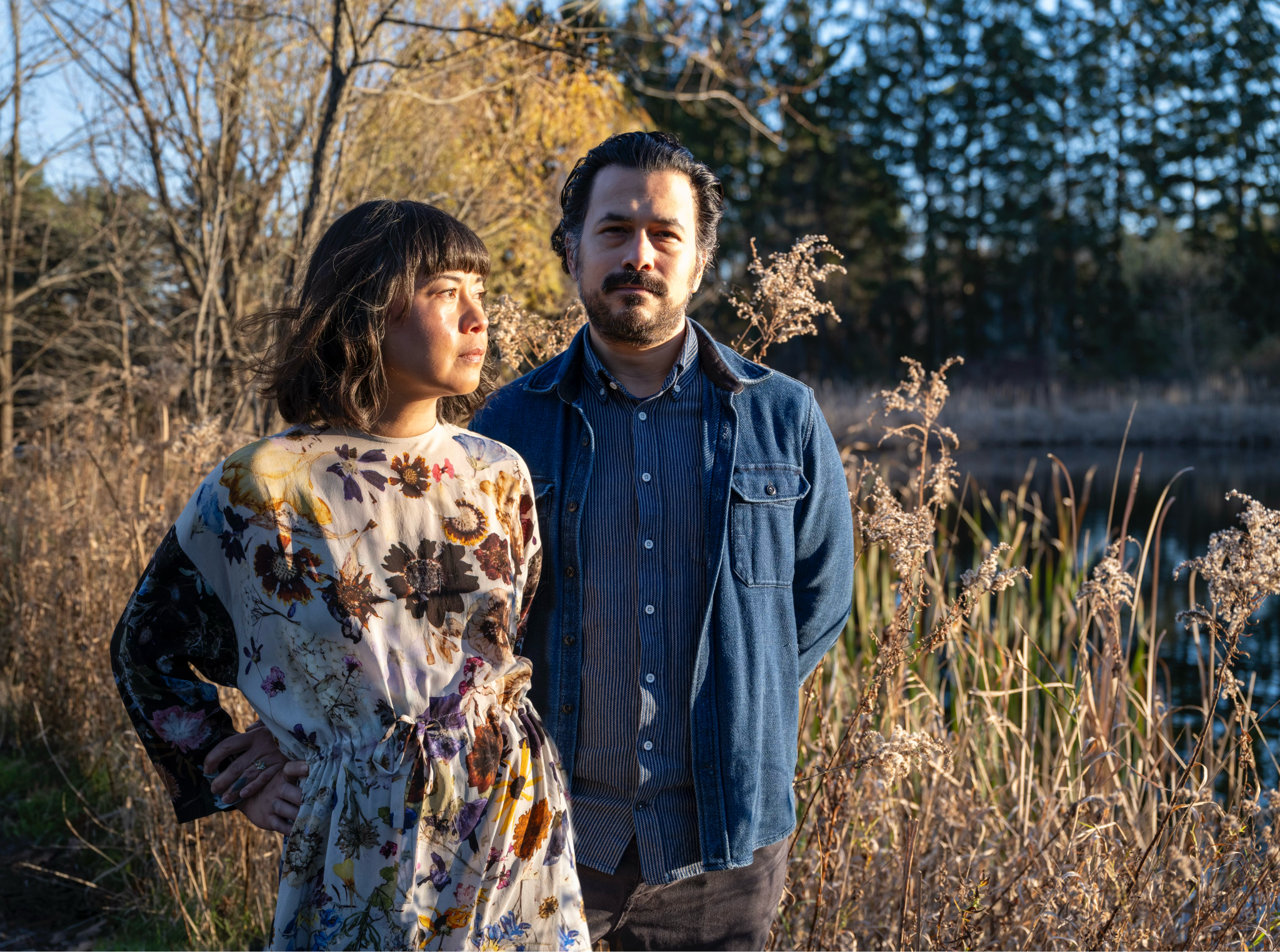
That was the last entry I wrote for Garbage Hill Farm before I made the move to Ithaca, New York, in July 2022. I made the choice to take a job at Cornell University with the understanding that the context there would allow me to continue my work in an expanded way. It was at Cornell where I met my partner and collaborator for LAND.
LAND is a site of research, cultivation, and care that I established with artist Oscar Rene Cornejo in 2023. Our project combines histories of artists’ engagement with land-based practices and techniques with environmental regeneration and conservation to cultivate sustainable futures.
Situated adjacent to Cayuga Lake on 4.2 acres on the urban fringe, the project site has a pond, old-growth pines, stands of black walnut trees, and open tall grass meadows, all home to wildlife. This landscape will be the grounds for outdoor art and ecology labs, studios, regenerative forestry, and a zone for community-driven agriculture. LAND is not a school, conservancy, or community garden. While sharing some relationship to these forms, the content is rooted in philosophies of covivencia: shared living, kinship, and considering social architecture to build relationships between people, their environment, and contemporary art practice.
The next time I returned to the practice of keeping a journal of what I was working on was in 2025, two years into my work on LAND.
June 2, 2025
I am writing this down in the notebook that I started in the first year I began planting at Garbage Hill Farm in Chicago. I thought this would be a record of my daily reflections and notes about the garden, but these planting plans and musings are often interrupted by notes jotted down in class on student work, ideas for essays, and the first draft of a commencement speech I gave that year.
I intended to have a daily writing practice inspired by Derek Jarman’s journals written at Prospect Cottage and Thoureau’s diary entries that kept track of his observations of the flora of Western Mass, but this fell by the wayside as the demands of my life and work found ways to make setting aside the time to write in this way feel nearly impossible. It is now over four years later that I am opening up this notebook with the hope of starting this practice again in earnest with a resolve that if I can find the time to respond to the barrage of relentless work emails, I can make time to write about the land I am tending.
I recently finished reading Olivia Laing’s The Garden Against Time, which reminded me of my own writing on gardening that I had forsaken. The book weaves and traces a cultural history of gardens alongside diary entries chronicling her personal restoration of a garden by landscape architect Mark Rumary, who designed the garden of the home she recently acquired. This was a parallel I could relate to in my own life, though the garden I had inherited at the home I recently moved into was not created by a trained gardener of note.
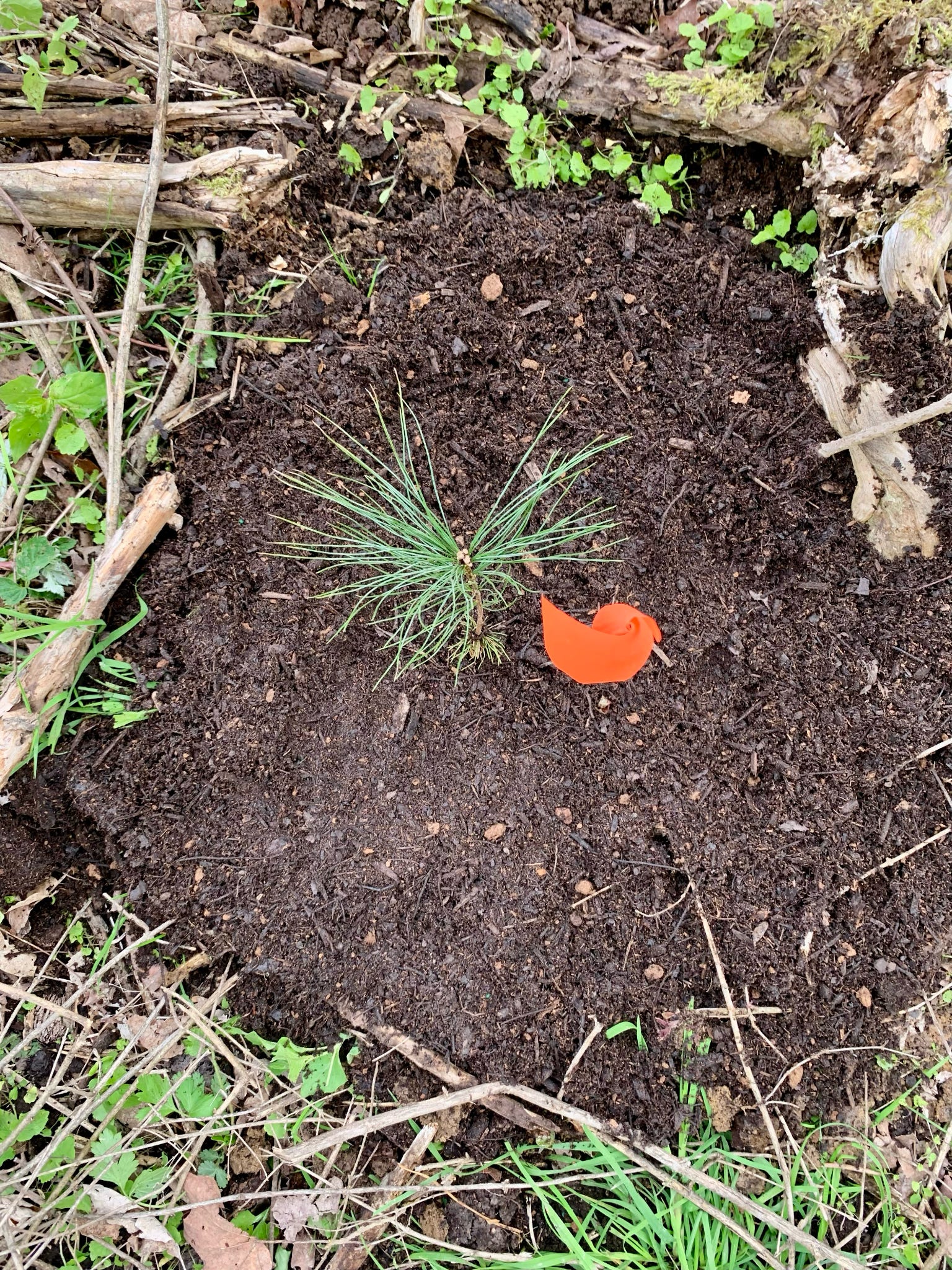
Like Laing, the grounds I am restoring were similarly neglected. I began to learn about the gardener here before me through my observations, as well as what I began to glean from the people in my neighborhood. I learned from Gale across the way that her name was Jean and that at one time she had a beautiful flower garden. With time, care, and attention, this began to reveal itself as I cleared brush and debris from the property. It became evident she had a love of purple flowers. For the first time this spring I saw the Allium bulbs she planted reemerge, beautiful tall fireworks of flowers marking her domain. Purple bearded irises also made themselves known, as did some native Marsh Blazing Star. I almost mistook the bright red blooms of California Poppies for the many brightly colored marker flags dotting the grounds attempting to protect all the new plantings we put in this spring.
Our planting plan was ambitious this season. We put over 500 plants in the ground, mostly trees and shrubs. While planting a young Eastern White Pine on the southwest corner of the lot I met Dave, who lives on the adjacent street. He told me that the now majestic pines I see around me that are easily over 100 feet tall were planted just 30 years ago. A true testament to their fast growing nature. I can’t wait to see what everything we put in the ground this year will look like 30 years from now. I hope this entry marks a new beginning. A new seed. A new chapter.
June 21, 2025
I think part of the reason I have been so conflicted about writing these entries is in part because I am an artist. As an artist I don’t personally have enough of an ego to believe anyone in the future would have interest in these.
Today I read The Resilient Homestead, a permaculture guide to setting up a whole systems ecological approach to home agriculture. The author, Ben Falke, spoke to the importance of keeping a farmstead journal so that one could return to it and reference what was happening on the land in past years, since our memories are fallible and markers of time can easily slip away. Tonight there was a moment that made me realize why I should be more vigilant about recording my daily environmental observations.
After returning home from Salt Point the land was a glittering sequined blanket of lightning bugs. I had never seen such a beautiful sight and hadn’t experienced it out here before. I told Oscar I just read an article about how our generation will be the last to experience fireflies.
One in three North American firefly species are at risk of extinction, with some species already being officially listed as “critically endangered.” There is no way I can capture what I saw here or how moving it was. I walked to the pond in the darkness in hopes I could see this doubled.
June 24, 2025
Heat advisory still in effect. It is impacting everything.
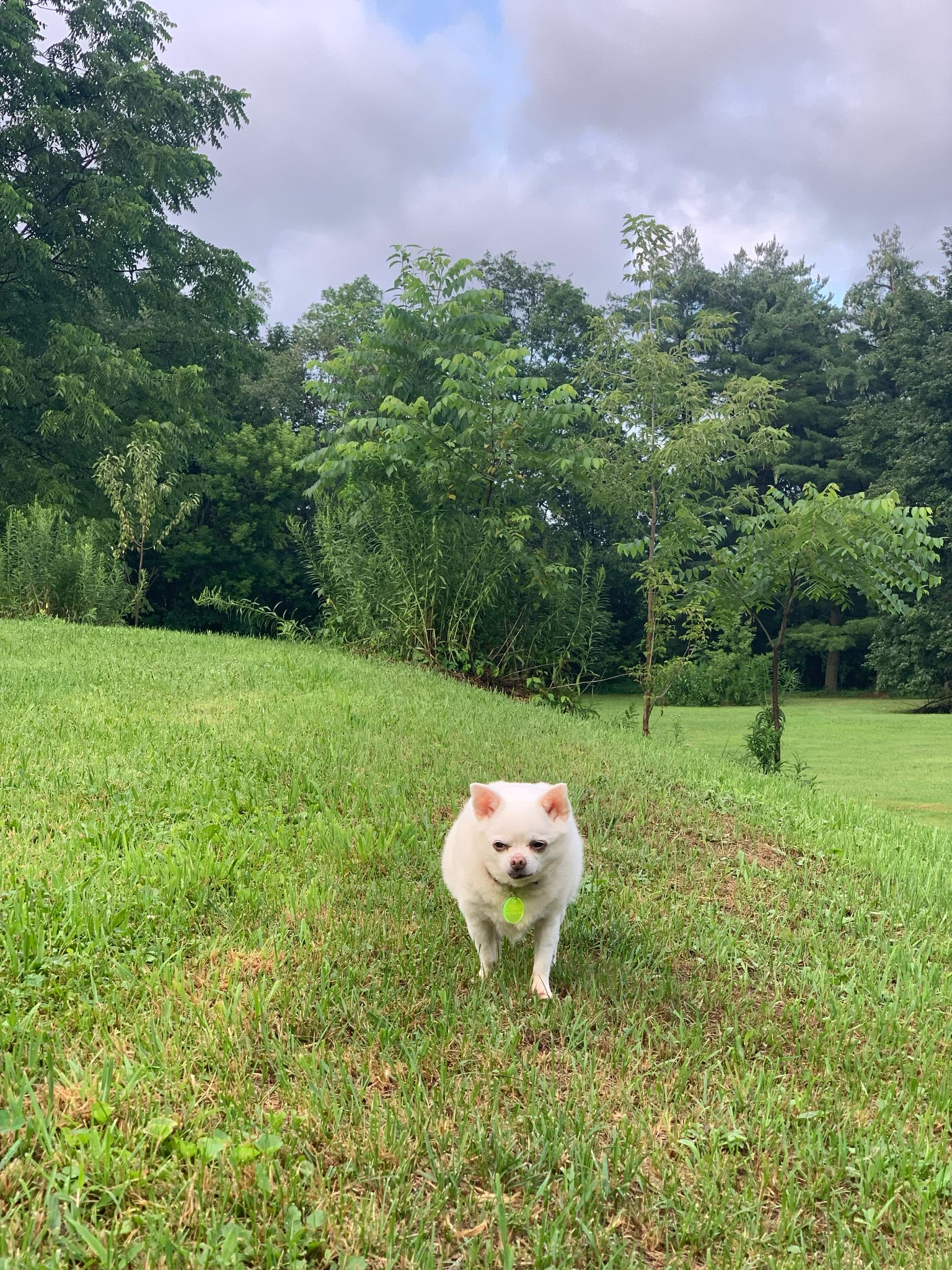
We had to go to the vet because it was aggravating Mei Mei’s heart condition. On the way home we stopped at the farm at the end of the road. We picked up some Queen of the Prairies. I usually gravitate toward tall feathery plants like these. Not sure where we will plant them yet. Fireflies were out again tonight.
October 11, 2025
Another large gap in entries. I hope this will be the last time that happens. Much to update in terms of fall plantings and shifts on the grounds, but that might be for the next entry. The political climate is reaching a boiling point, and I am finding it hard to focus on anything else. I am so glad to hear how Chicago residents are mobilizing to resist ICE and protect their neighbors. Some Chicago restaurants are refusing to serve ICE agents and closing operations when they fear their employees are at risk. Community members are showing up every morning at schools to protect children from being disappeared by ICE.
My aging mother is refusing to move to the United States from Canada so I can care for her in old age. She would rather live in a nursing home than live under a fascist regime. She already witnessed a corrupt dictatorship in the Philippines; she knows the patterns well.
Oscar is particularly affected by the news; his own family fled civil war in El Salvador, and he sees the signs that this country is on the precipice of a similar future. It almost feels unthinkable to be working on planting trees at this moment, but I am reminded of what poet W. S. Merwin wrote, “on the last day of this world I want to plant a tree.”
I will keep going.

Jen de los Reyes is an artist, educator, writer, and community arts organizer. With roots in the Riot Grrrl and DIY music scene, her practice incorporates pedagogical, ecological, and organizational methodologies. She founded and directed Open Engagement, an international conference on socially engaged art that was active from 2007–19. She worked within Portland State University from 2008–14 to establish the Art and Social Practice MFA program with a curriculum focused on place, engagement, and dialogue. Following that, Reyes was the Associate Director of the School of Art & Art History at the University of Illinois at Chicago, where she taught in the departments of Art and Museum and Exhibition Studies.
Her collaborative work and practice have been situated at institutions including the Carnegie Museum of Art, the Queens Museum, the Oakland Museum of California, MCA Chicago, and the Portland Museum of Art. She is the author of several books, most recently Defiantly Optimistic: Turning Up in a World on Fire. She divides her time between Chicago, where she founded Garbage Hill Farm, and Ithaca, NY.