

Money Talk is a candid Q&A about the actual economics of creative work. Each installment interviews an artist, fabricator, handler, educator, curator, or organizer about the resource infrastructures that make their work possible.
For the Spring/Summer 2026 Issue: GROUND, Art Forearm Editor-in-Chief Jennifer Seas is in conversation with Chris Taylor, Director of Land Arts of the American West at Texas Tech University.

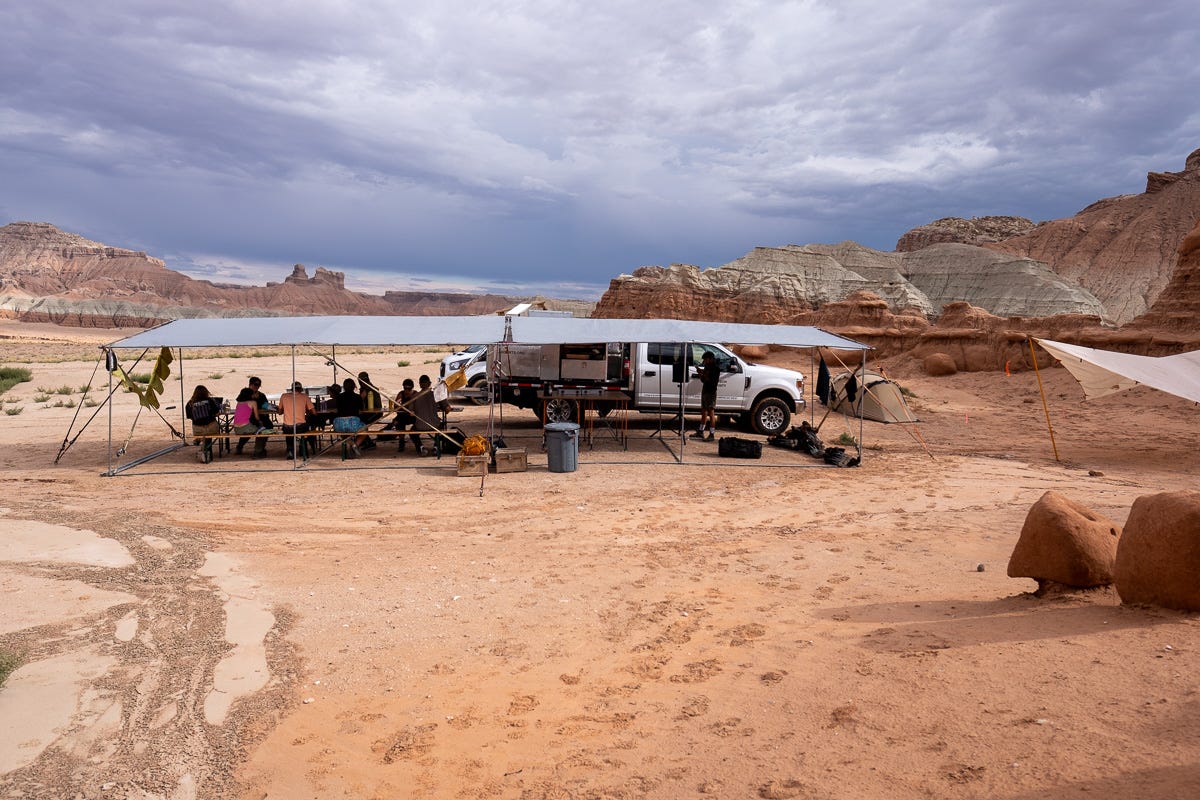
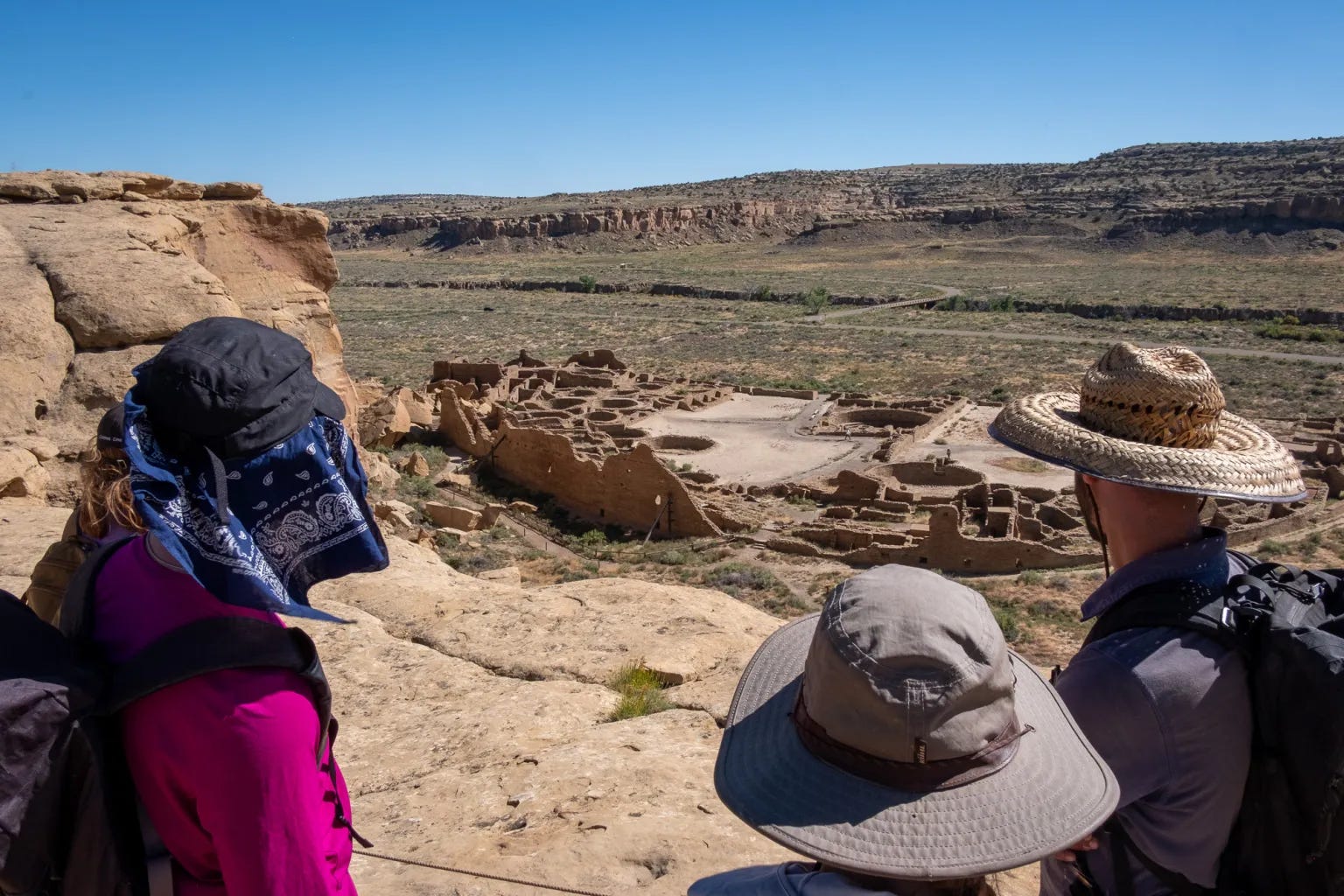
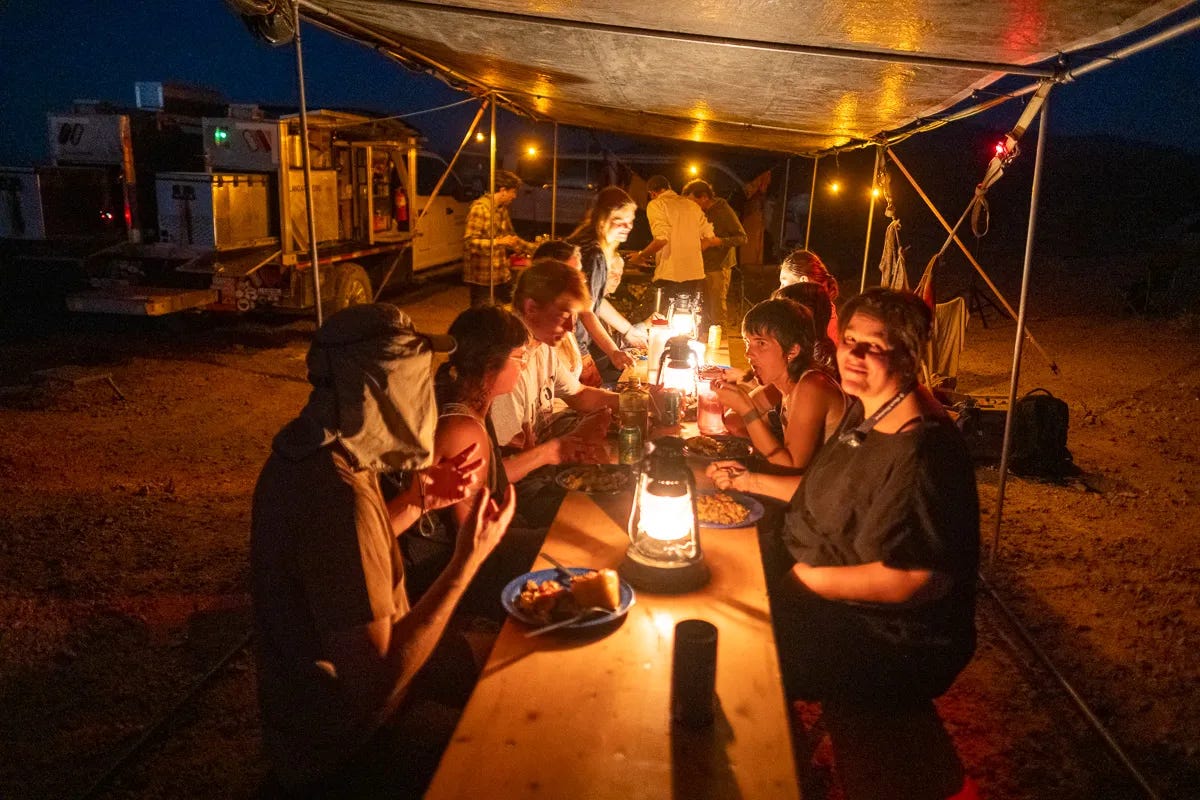
Land Arts of the American West is a transdisciplinary field program dedicated to expanding awareness of the intersection of human construction and the evolving nature of our planet. The program leverages immersive field experience in the desert southwest as a primary pedagogic agent to support research that opens horizons of perception, probes depths of inquiry and advances understanding of human actions shaping environments. Land Arts attracts architects, artists, historians, and writers from across the university and beyond to a “semester abroad in our own backyard” that travels 6,000 miles overland while camping for two months to experience major land art monuments—Double Negative, Spiral Jetty, Sun Tunnels, The Lightning Field—while also visiting sites to expand understanding of what land art might be, such as pre-contact archeology, military-industrial infrastructure, and sites of contemporary wilderness and waste. Throughout the travels, and on-campus, participants make work in response to their experience, which is exhibited at the Museum of Texas Tech University to conclude the field season.
Chris Taylor: Check, check, radio, check…
Jennifer Seas: We’re on! Thanks for sitting down to get into some Money Talk today, Chris.
CT: Happy to sit down with you and get into this. Money introduces interesting questions. It might be productive—and you’ll decide whether any of this is productive—to talk about resources in an expanded sense. A big part is less about money than energy—and the way energy is cultivated and shared is, I would say, a bigger reason why we’re still going as a program.
JS: I think that’s important to include, because if you don’t consider those things or have some resources there, it doesn’t matter how much money you have, it’s not going to be successful.
It’s hard to imagine convincing a university to invest in a program like Land Arts of the American West in the risk-averse climate that we’re in today. So I’m curious what strategies you used to initiate the program, and how you might approach it if you were doing that today.
CT: This is a super necessary and relevant question. You’re right that the climate that we all live in is very different institutionally, culturally, socially. And so there’s a lot of potential reflection points in the question
As much as I think we all know that we live in a risk-averse moment, it’s also astounding that we’re averse to these immediate—and I would say—relatively ephemeral risks. Meanwhile, these epic, life-ending planetary risks are just kind of blowing past without much traction.
Maybe that’s because of the currency of finding traction? We can get traction on trying to limit liability in a more immediate way, but the liability of humanity on the planet is harder to get one’s mind around.
To me, that conversation is a question to flip around and say, how can any school not do something that seeks greater transformation? It becomes foolish to not put people together and in the world in ways that make what really matters the most as evident as possible. That it’s risky to create educational environments where people can coast through and think nothing happens.
And I guess I should also say that I have a pretty different tolerance for risk than most people. What may seem really risky to some people may not seem risky to me relative to the field program, because it’s grown over time and over the years of seeing what happens when people are in certain settings.
I’m encouraged by the fact that there are now more field programs in existence within universities and outside of universities. Maybe I just know more about them because I’ve been doing this longer, yet when we started, there was no immediate example of what we were trying to do.
The Rural Studio had come into visibility from Alabama, and that was somewhat of a model within architecture and immersive education that was culturally and socially motivated. Other examples tended to be farther afield. Outward Bound exists as much more about personal values than disciplinary education. And then there were touchstones like the Foxfire manuals and the back-to-the-land movement of the 60s and 70s.
So there were examples, but not within universities where you could say, “if they can do it, we can do it.” We didn’t have that.
It was more folding together archaeology, ancient history, contemporary art, architecture and cultural production. Similar to what Lucy Lippard did in Overlay, yet bringing it into a studio context. The gesture of the idea was fairly simple. It wasn’t some epic epiphany—it was just, “this makes sense.”
The key answer to what strategies we used to initiate the program: the person I developed the program with, Bill Gilbert, met Patrick Lannan, and the Lannan Foundation gave some initial support through the University of New Mexico.
Because there was some seed money, decisions could move forward. Showing up with money makes people take meetings. That got the ball rolling at New Mexico, and also in Austin where I was at the time.
So that’s a recommendation: if you’re trying to do something out of the mold within higher education, figure out a way to bring money to the table before approaching the institution. Make it a fully-fledged plan.
JS: Make it easy for them.
CT: Yes. And the other key piece is that the program runs on a really small budget. We get a lot out of every dollar, which keeps us close to the ground. That’s pedagogically important—not just roughing it, but being in direct contact with weather and the elements.
And not needing expensive infrastructure makes it possible. Well, we do have a special truck now—a dream made real with a visionary gift from Owl Call Radio—yet that may be another story.
There’s also a critique: we’ve undervalued ourselves to get this done, which is also too often the history of running anything.
JS: Artist-run projects tend to suffer from this, yes.
CT: You don’t pay yourself because you believe in the mission, but then later it’s hard to dig out and be taken financially serious later.
JS: Are there ways that you check yourself around that now?
CT: Mmm...Yes and no. I mean, I think probably more no than yes just because I’m willing to just do the thing and not be like, well, I’m not doing that unless I’m getting compensated in some way.
JS: Also you’re doing operations, but you are also responsible for development and curriculum, and everything else.
CT: Yeah. Yeah. We do have a fairly robust list of field guests compared to participants. There’s always more field guests than there are participants, and some of those guests are supported and funded to join us while others are people that find their way to us. And we invite them to dinner, we take care of people that find us, but we’re not able to pay everybody. I’m a big fan of W.A.G.E. and what it stands for, so there’s moments when I wonder, should we check ourselves on this?
Suppose I believe that if you’re going to join us and talk about your work, we should be compensating you. Just feeding you isn’t quite the same as writing a check, but it would be a lot for us to work in a zone where we are paying everybody the same— would be nice to have that kind of purse!
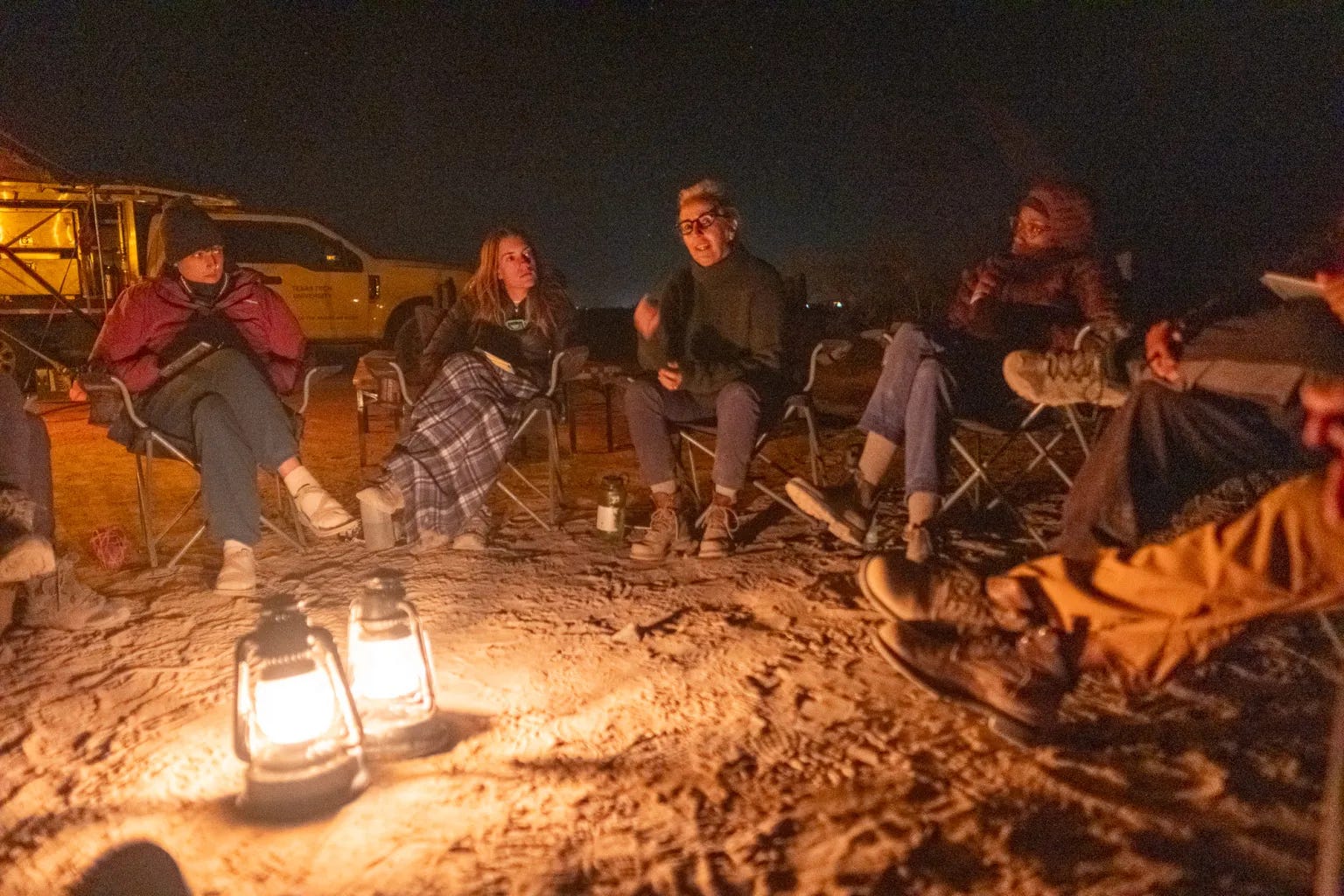
Generally, it’s a good balance, and people are coming to us because they care deeply about what we are doing and want to connect and have something to offer. They want to be in dialogue with the participants. Seeing that map out over time is fruitful.
The strength of the community, and how the community has supported itself, both in an operational sense and in the community of alumni is way bigger than the program itself or any individual that happens to be driving anything.
That’s super heartening and encouraging, and that’s a testament of us doing something relevant—if it wasn’t giving something to people, they would walk away. We tend to get more people walking towards us than walking away from us.
This is not a thing for everybody, and that’s totally fine. I’ve often said this is an experience that everyone can benefit from, but not everyone’s in a position to in a given moment. It takes commitment and sacrifice, and it’s a challenge.
When we started this, it wasn’t about asking: is this an acceptable load? If I was waiting around to make sure that I had enough support, so this would be more like a standard teaching load, it never would have happened.
I would welcome such a structure, yet because of the circumstance of the institution and where I am, that it hasn’t happened. I’m okay with that, but I’m well aware that it means that I’m wearing the development hat and shopping for the food, the logistics hat, and the seminar leader, critic, all of it. It’s taxing.
I feel like I’m both pointing out all of the problems and then making excuses for all of them at every turn, yet I think this arrangement speaks to the interconnectedness of the totality of the program in that there isn’t separation between things.
JS: This is the challenge of scaling things, which is such a popular talking point now—everything needs to be scaled, but then everything becomes fragmented, and the person who’s doing this thing over here doesn’t fully understand this thing over there. Everyone wants growth, but there is sometimes something important about recognizing when something is exactly what it needs to be.
CT: I guess I’m at least a little bit self-aware enough to know that just mapping what we’re doing right now onto a future is unsustainable, unrealistic. And even to put that onto somebody—like, here, to a colleague right now, here, have the keys, good luck. Call me if you need anything—that’s dangerous and foolish.
It’s giving somebody a burden I was willing to build for myself.
JS: I appreciate what you’re saying—you reminded me of a conversation I had yesterday when you were talking about different vantage points of risk.
Our institutions are really clear about short-term risks, but not about long-term risks. I was thinking about how people in leadership positions are often thinking on the timescale of their career, not the timescale of humanity.
So I appreciate that you’re thinking about sustainability across different timescales—your career, but also beyond that.
CT: Yeah. I think there are examples of places where unique things have happened and continued. Samuel Mockbee died suddenly and too young, and Rural Studio continued. He was able to help with the transition before he passed, and the person who took over has made it their own. It’s lived on within the spirit of its source, yet expanded.
That’s totally fine. It’s a question of the transference of desire and motivation.
This has become a rear-view mirror conversation, but there haven’t been many “most difficult” things, because at every turn it’s been, that’s a ton of work, and I’m excited about doing it.
Like, figuring out how to do a broadcast from Spiral Jetty—we’ve never done that before, okay, let’s figure it out.
JS: You’re invigorated by that kind of problem solving, so it’s hard to imagine it as non-sustainable when it seems like that’s what feeds you.
Then I’m curious—what worked better than you expected?
CT: The first thing that comes to mind is the community.
Over the years, each group has different energies—sometimes harmonious, sometimes fractious—but what’s been way better than expected is the strength of the community.
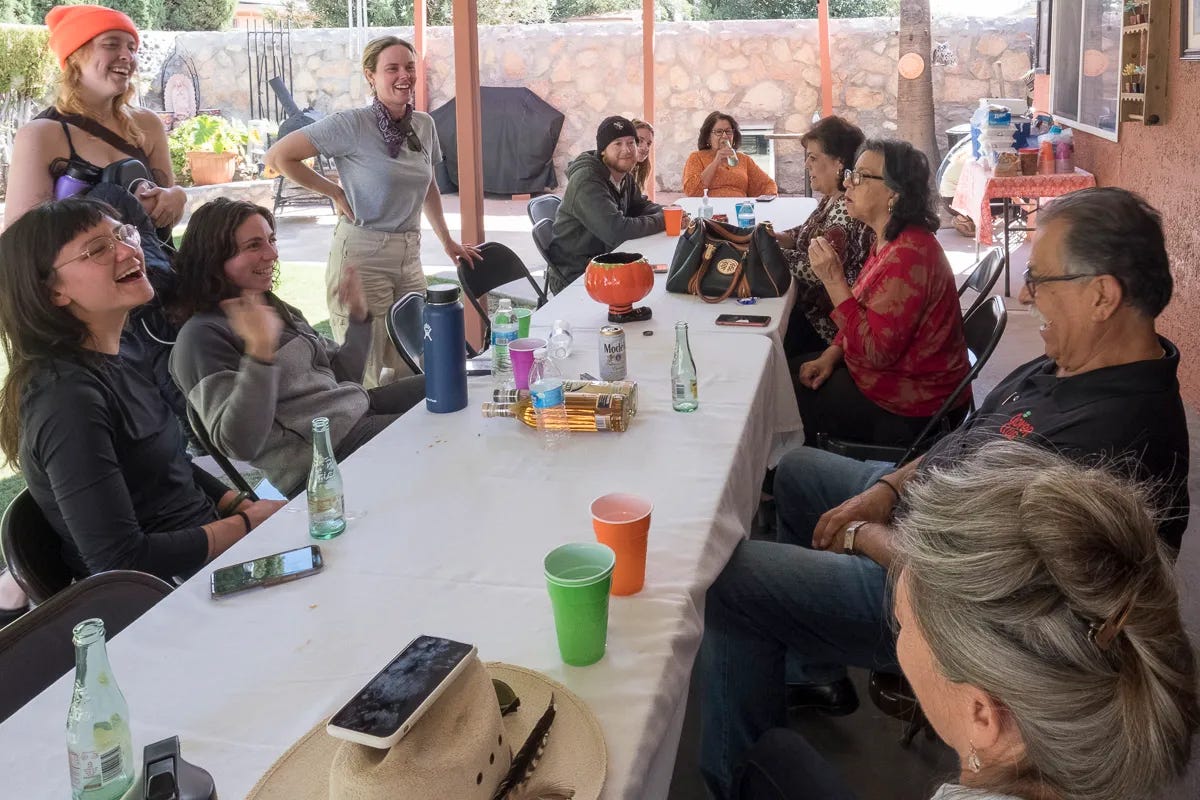
It exists at different scales and levels of engagement. People come back after years, and it’s as if they never left. They connect with the current group and reflect on how meaningful participation still is for them.
That’s powerful.
JS: Yeah, it’s very cool.
Are there strategies or structures you recommend for artists or educators who want to build alternative or field-based teaching models, especially thinking about funding and labor?
CT: The biggest thing is just to do it. The world needs more of these things.
I recently met Piero Golia who runs the Mountain School in LA—an alternative school that’s been going for over 20 years. It was the same story: willed into being.
JS: I think that’s important for people to hear, especially what you said about not getting caught up in legacy. It’s okay if it doesn’t last forever. It just needs to be what it is now.
CT: Exactly. There’s that Greil Marcus book Lipstick Traces, about how something ephemeral can create seismic cultural shifts.
Something can burn bright and short and still matter deeply.
That makes more sense to me than incrementalism—trying to plan everything or ensure long-term perpetuity before starting. That can become insurmountable.
Right now, with institutional risk aversion, it’s increasingly difficult to do anything. Especially in the arts and humanities, where you’re asking for inventive thinking, but the systems limit you to predefined options.
We’ve shifted from deep engagement—like reading a book—to quick snapshots of information. Everyone has access to the same data. What matters now is what you do with it.
Our path forward is through human imagination.
Even with AI, I place confidence in human eccentricity—let machines handle the mundane tasks so we can focus on wonder and insight. That’s why we need more educational and cultural spaces that expand perception rather than narrow it.
JS: How do you think about value in a program like this, when outcomes aren’t easily measured or monetized?
CT: The value is in people and the connections they build, and what that enables.
Think about Barry Lopez—his writing isn’t just about what he saw, it’s about opening ways of seeing. Creating tools of perception. The real value is helping people see more possibilities—more ways to live, work, and connect.
Monetizing that is secondary.
We make too many life decisions based on assumptions about money. But if we’re thinking about building culture or making humanity more humane, leading with the checkbook is part of the problem. We’re too eager to balance budgets before feeding, and educating, people.
My hope is that people develop the ability to construct their own perception of the world and act on it—not just move passively through predefined systems.
JS: And connect with other builders.
CT: Exactly. That’s what needs more support.
There’s also this issue of large-scale art projects—people critique them by saying the money could have been used better elsewhere. That’s a false choice.
The problem isn’t that one project got funded—it’s that we don’t fund more projects by more people. We don’t need to tear down the one thing that got built. We need to ask how to support more. There’s plenty of money in the world—it’s just not allocated toward cultural production in meaningful ways. The question isn’t just about money—it’s about what we define as value and wealth.
Barry Lopez writes about how early Europeans only valued what they could extract and take from the Americas. That definition of value led to enormous harm. We don’t have to use that definition today.
So the real question is: what do we value?
The Land Arts program offers other ways of measuring value—of a person, a work, a place. That’s where it becomes meaningful.
JS: I think that’s a great place to end. There are a lot of good thoughts here, so thank you.
CT: I’m excited about what you’re doing. I think it’s important to talk about money openly instead of pretending it doesn’t matter or assuming people just emerge from wealth.
JS: Yeah, we have to talk about it!

Chris Taylor was born in Germany, raised in waters of Southwest Florida, lives in arid American Southwest. An architect, educator, and director of Land Arts of the American West at Texas Tech University, Taylor is deeply committed to the intersection of human construction and the evolving nature of the planet. The Terminal Lake Exploration Platform, created with support from the Graham Foundation for Advanced Studies in the Fine Arts, continues to facilitate visual and performative research within under-examined basins and internal aquatic fringes. Taylor studied architecture at the University of Florida and the Graduate School of Design at Harvard.