

Toolbox: a practical, material-oriented guide that helps artists navigate technical, logistical, or safety challenges in their work.

This guide will outline the application and effects of a molding paste ground intended for use with oil or acrylic paint, which creates an extremely smooth, thick, and non-absorbent surface.
Ground is the layer in a painting between the supports (canvas, wood, or paper) and the paint. It can be prepared to have different characteristics—smooth or textured, thin or thick, absorbent or non-absorbent, white or colored—depending on what kind of effects you want to achieve.
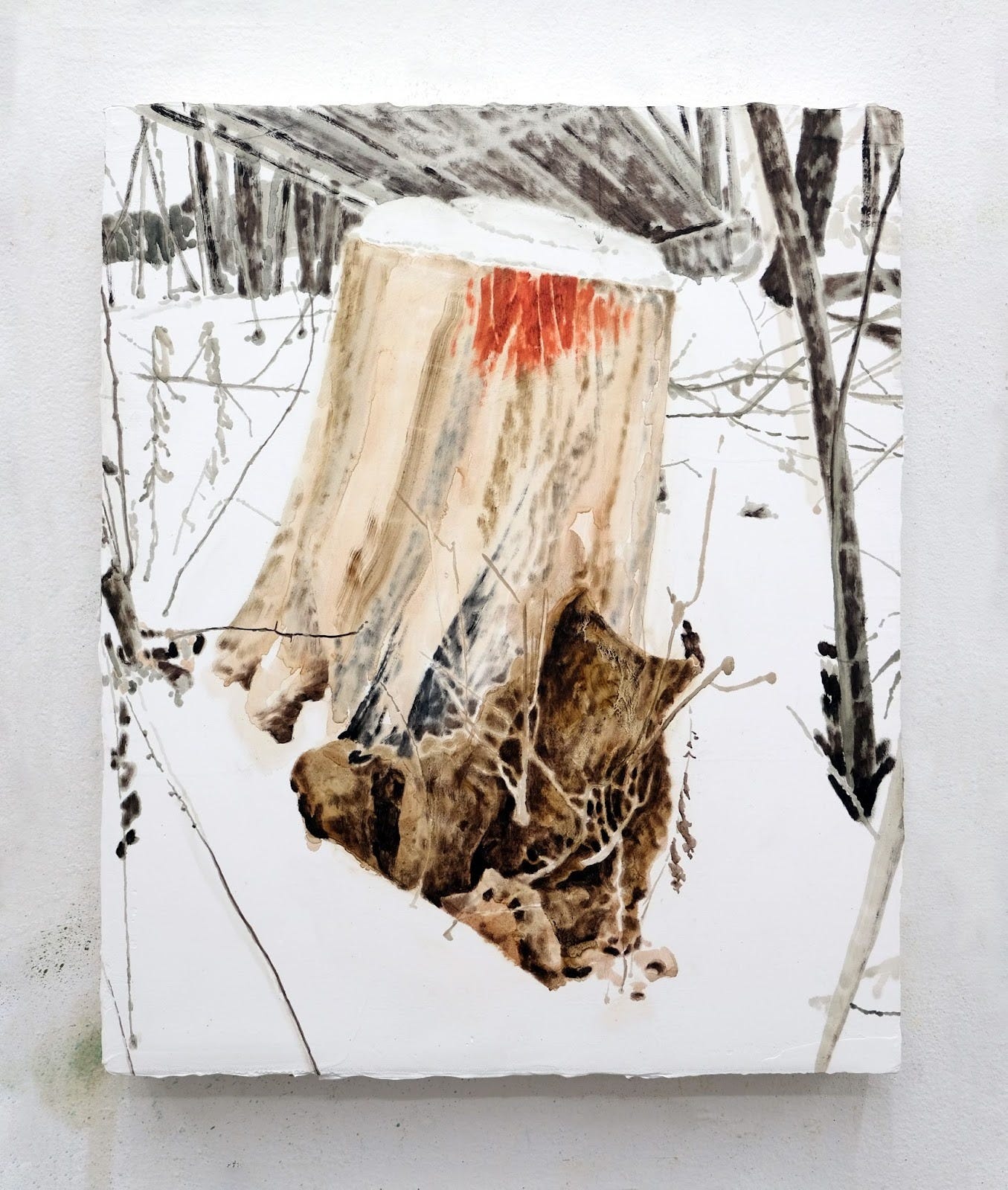
This guide will outline the application and effects of a molding paste ground, which creates a surface similar to mylar or another polypropylene material. A molding paste ground is extremely smooth and relatively non-absorbent; without much “tooth,” paint glides across the surface very easily. This makes it easy to create very thin layers or washes of color when the paint is mixed with enough medium or extender—oils and acrylics can take on some of the visual effects of watercolor. It also makes working with translucencies and overlapping layers of color rewarding. Lastly, the way paint sits on top of the ground makes it easy to create texture with the brush. Especially with oils that remain workable for hours, as paint is pushed across the surface, evidence of the thickness or length of the bristols is visible.
*A note of clarification on size (sealant) vs. ground: Painting material terms can often be confusing, and they are sometimes used interchangeably or inconsistently by manufacturers. A size is a glue used to seal the canvas or wood panel before doing any ground preparation. Sizing a surface protects the support, ensuring that the paint or even the ground doesn’t seep into the fibers of the canvas or wood, helping to preserve the painting over time. While the molding paste ground is generally applied thick enough to effectively seal the support, I would still recommend applying a pH neutral PVA (polyvinyl acetate) size to create the most archival surface.
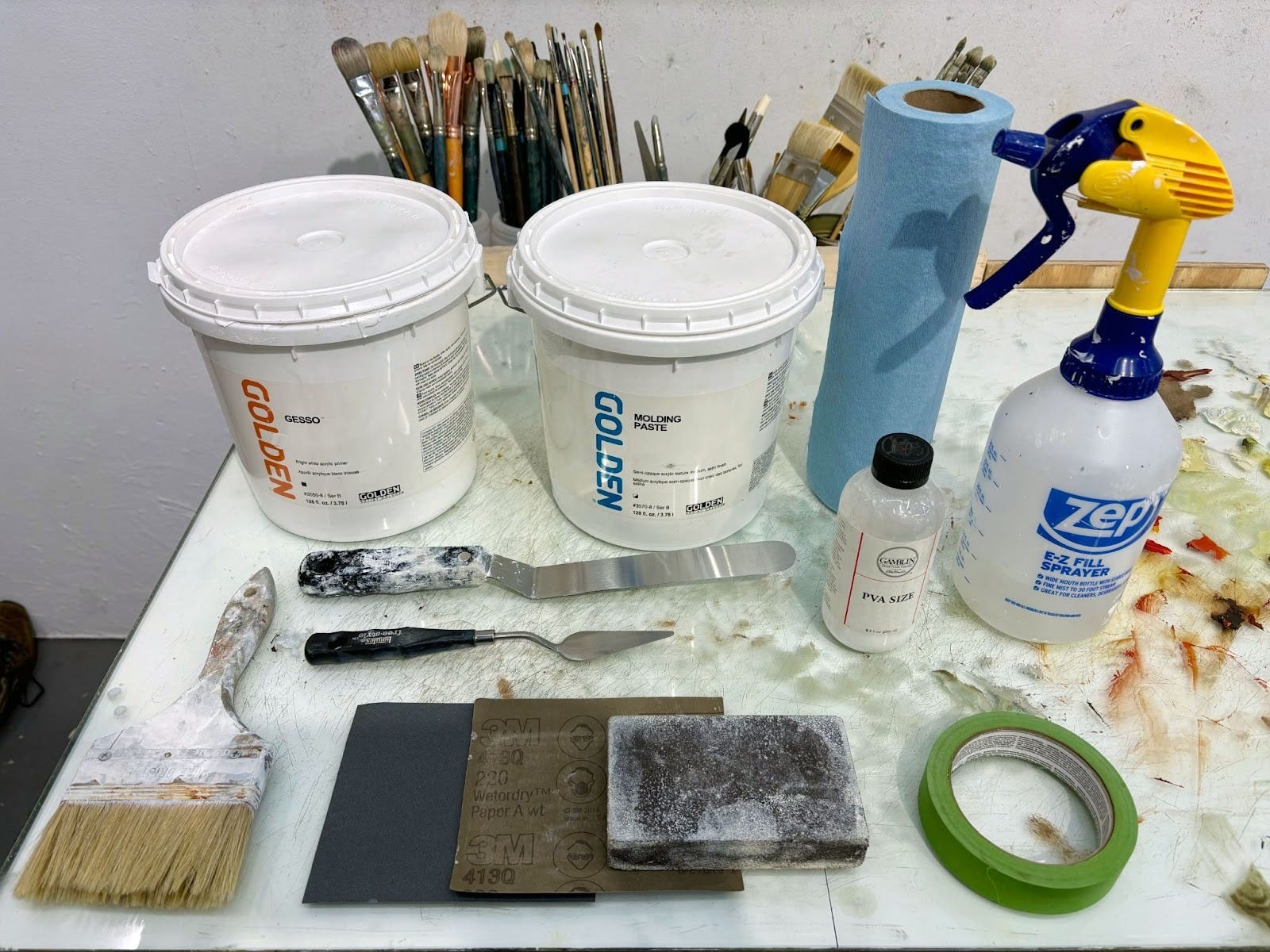
The molding paste we’re using for this project is a water-based product made by GOLDEN that has a thick consistency and forms a flexible, semi-opaque film when it dries. It is often mixed directly with acrylic paints for textured impasto techniques. However, when applied in layers directly to a support and wet-sanded, it creates a uniquely smooth, glass-like ground that allows oils and acrylics to glide like watercolor. The ground we are preparing is intended for use with oil or acrylic paint.
Required Materials/Tools:
GOLDEN Molding Paste
large palette knife
small palette knife
wet/dry sandpaper (150–320 grit)
spray bottle
stretched canvas or wood panel
paper towel
PVA size
wide brush
Optional:
white gesso
sealable mixing container
sanding block
masking tape
Step 1: Choosing a Support
Since this ground is thick and requires the buildup of multiple layers of molding paste, it works best on a more structural support—wood panel or canvas work better than paper. Additionally, having a flat and rigid surface, while not necessary, makes the application process easier. For example, canvas stretched over the panel will be easier to work with than canvas stretched on a strainer. Having something to push against is helpful for achieving the unique flatness and smoothness that is possible with this material.
Step 2: Tinting the Ground (Optional)
Once you have your support ready, you can decide if you would like to tint your molding paste ground. If you want your ground to be white, mix equal parts white acrylic gesso with molding paste in a large sealable container. This step is optional, as molding paste on its own has a light-grey semi-translucent color that looks almost like frosted glass. This color can be nice for creating muted tones, while a white ground makes translucent oils look more luminous.
Step 3: Application
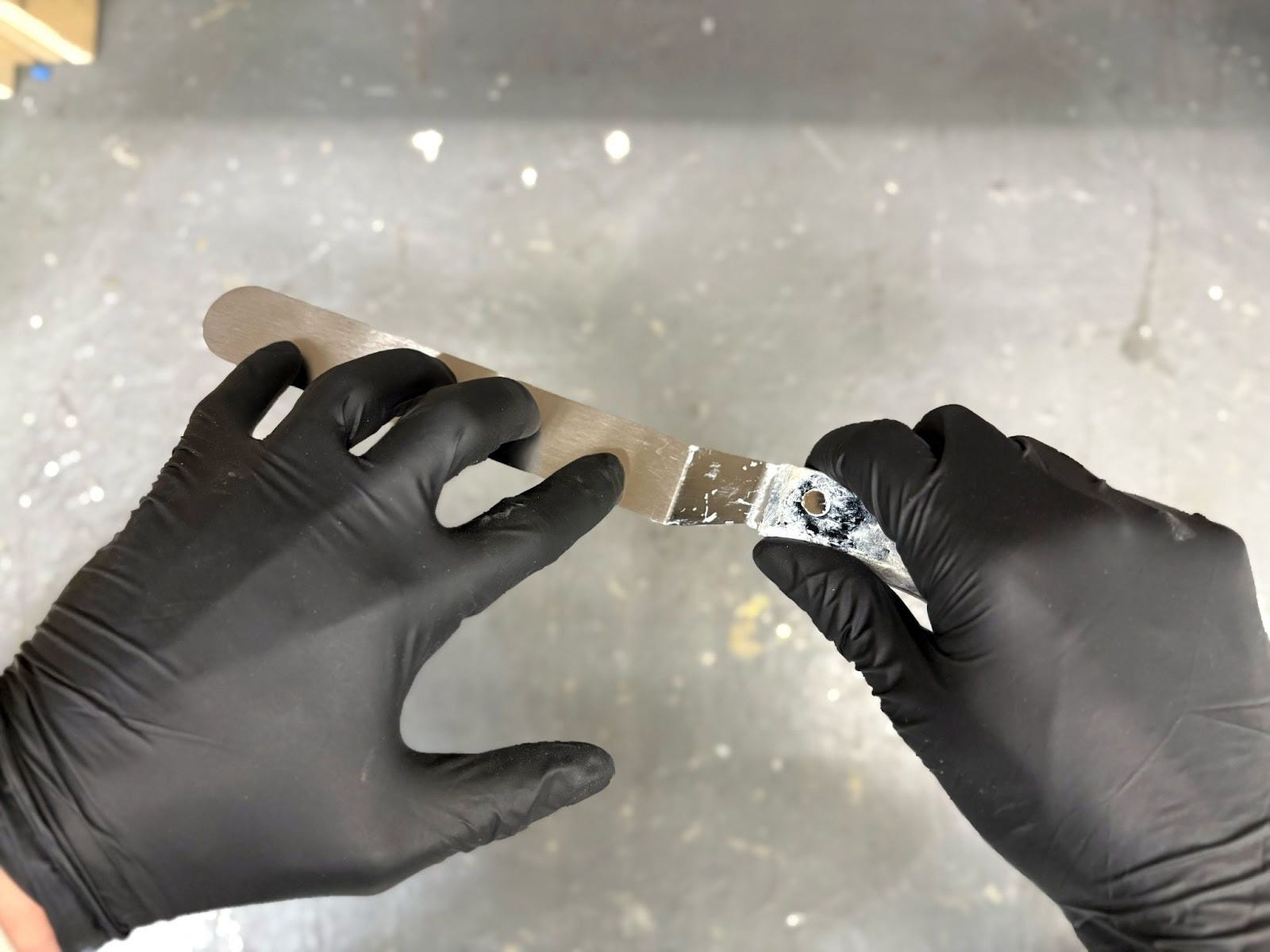
Using the large palette knife, loosely spread molding paste onto the canvas/panel so there is enough to cover the surface. (It’s better to put too much than too little, as the extra will be scraped off in the spreading process and can be reused). Use one hand to hold the handle of the large palette knife and place the four fingers of your other hand on top of the blade.
Then, starting in one of the top corners, after cleaning the knife, push down and drag the blade to the bottom of the canvas/panel. The idea is not to scrape but to flatten and push the paste so it spreads across the surface as flat as possible. You will want to keep the blade level, with only the slightest angling up of the edge closest to you. After the first stroke, move left or right across the support, slightly overlapping your previous stroke, until the entire surface has been covered.
I find that I can achieve the best coverage if I do this once, then flip the support 180 degrees and do the same things all along the opposite edge. If there are big ridges left between the strokes, then push with less pressure.
Molding paste dries relatively quickly, so it’s important to start immediately after applying the paste to the surface. You will be able to go over your strokes if you’re not satisfied on the first pass, but after a couple attempts it gets tacky and won’t spread smoothly. It is okay if there are ridges or gaps left at the end of your first layer—these can be sanded away or filled later.
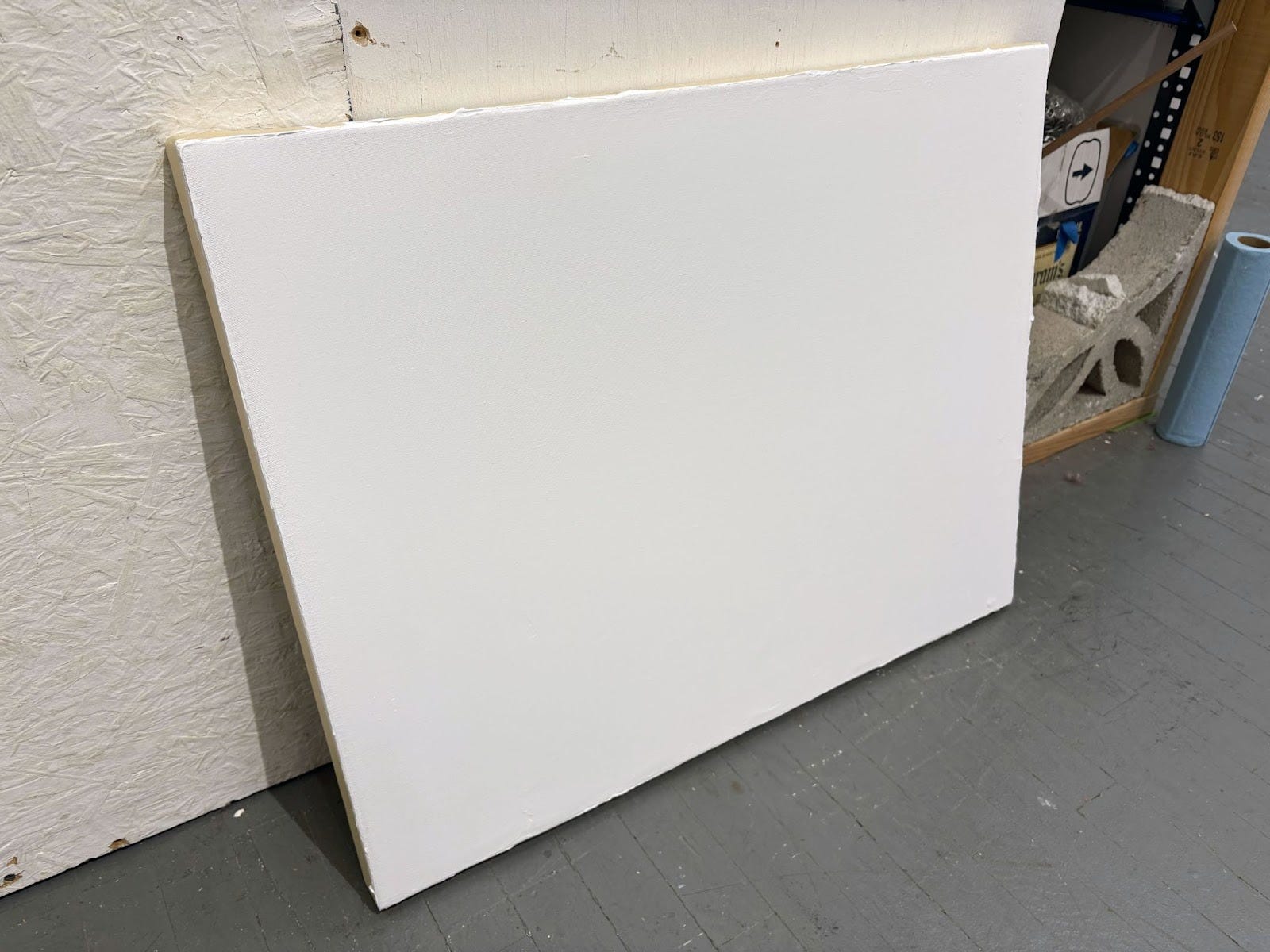
Depending on the thickness, it takes about 4–8 hours for a layer to dry before the next one can be applied. (Note: if the surface feels dry to the touch but is still cold, then the paste hasn’t dried all the way through.) Apply at least three layers or until the weave of the canvas is no longer visible. Any holes or divots that are left in the surface can be easily filled using a small palette knife once the last layer has dried completely.
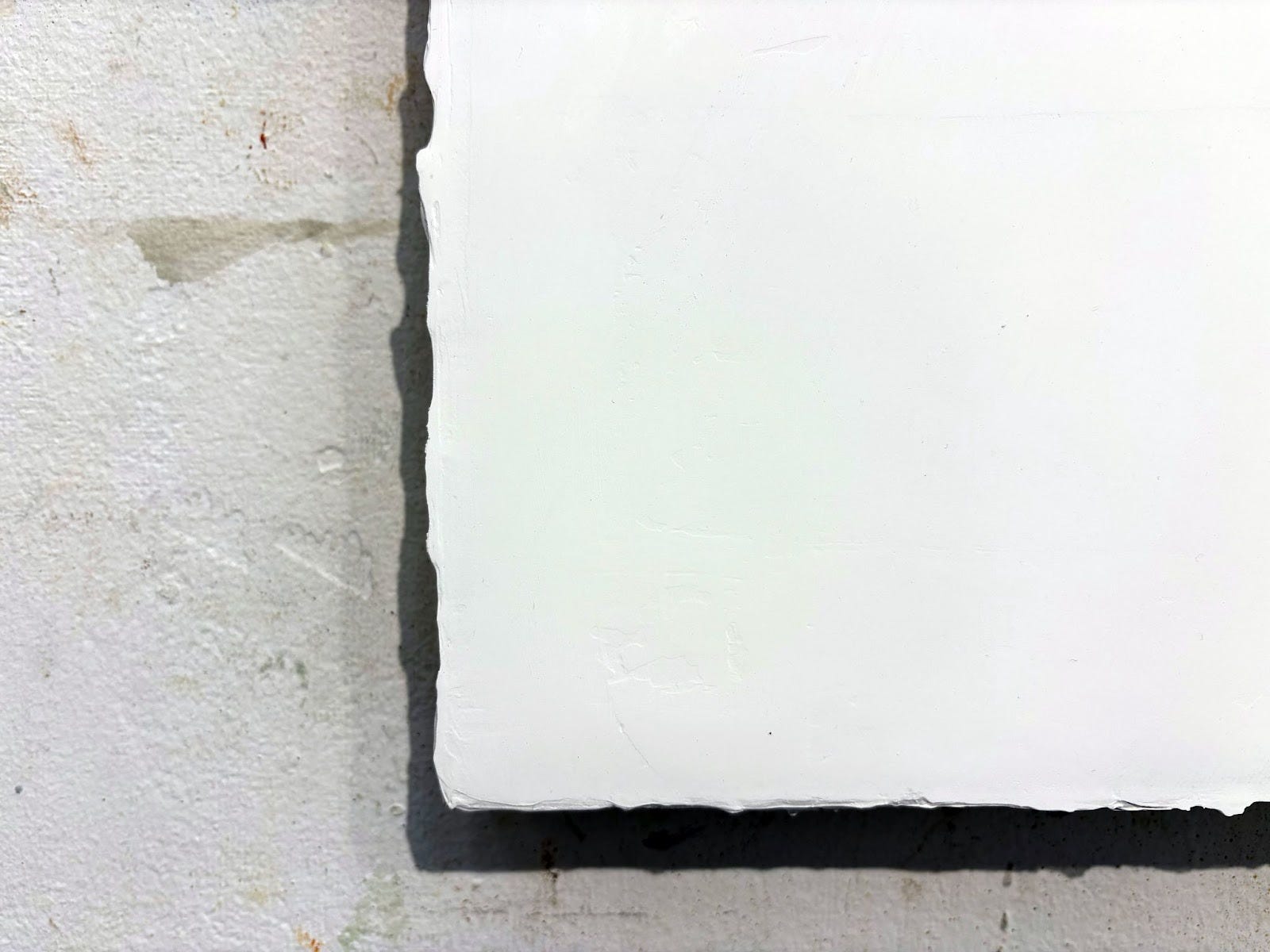
A note about the edges: after multiple layers, you will notice that the ground builds up and hangs over the edge of the surface creating a sculptural border around the side of the support.
This is one of my personal favorite characteristics of the molding paste ground; however, if you find it distracting, it can be removed with an X-acto blade by trimming it perpendicular to the surface.
Step 4: Wet Sanding
In this last step we will take advantage of the molding paste’s ability to be finished with an extremely smooth surface. Wet sanding is great for finishing in general—it prevents clogging in the sandpaper and reduces inhalation hazards by trapping dust in the water—but it works particularly well with this water-based material.
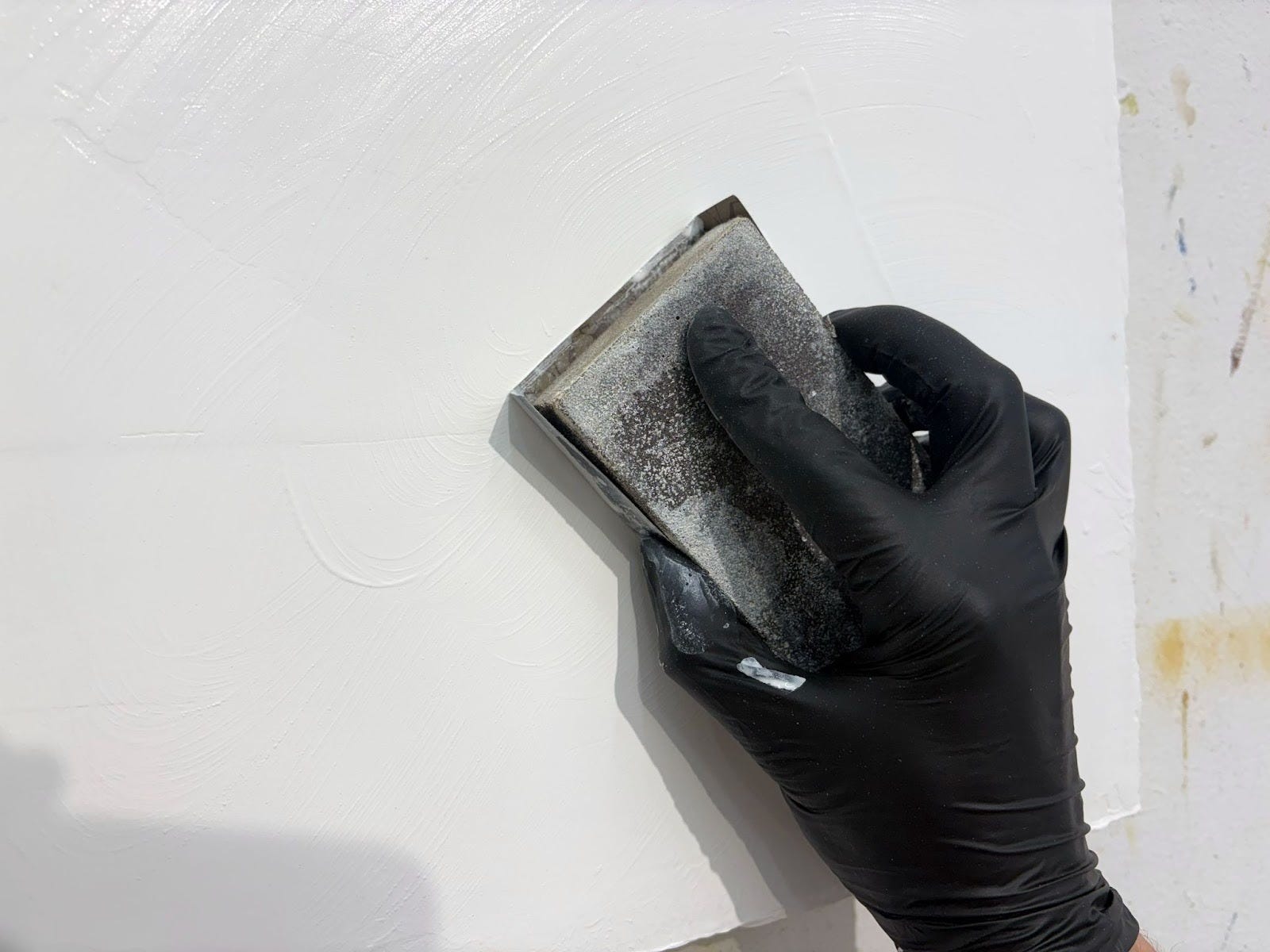
First, using the spray bottle, coat the surface with a thin layer of water. This will reactivate the ground. Starting with your 320 grit sandpaper, wrap it around a sanding block (or other flat object like a 2x4 cutoff) and begin working the surface with circular motions. The water will mix with the sanded molding paste creating a white slurry that helps the sanding block glide along the surface.
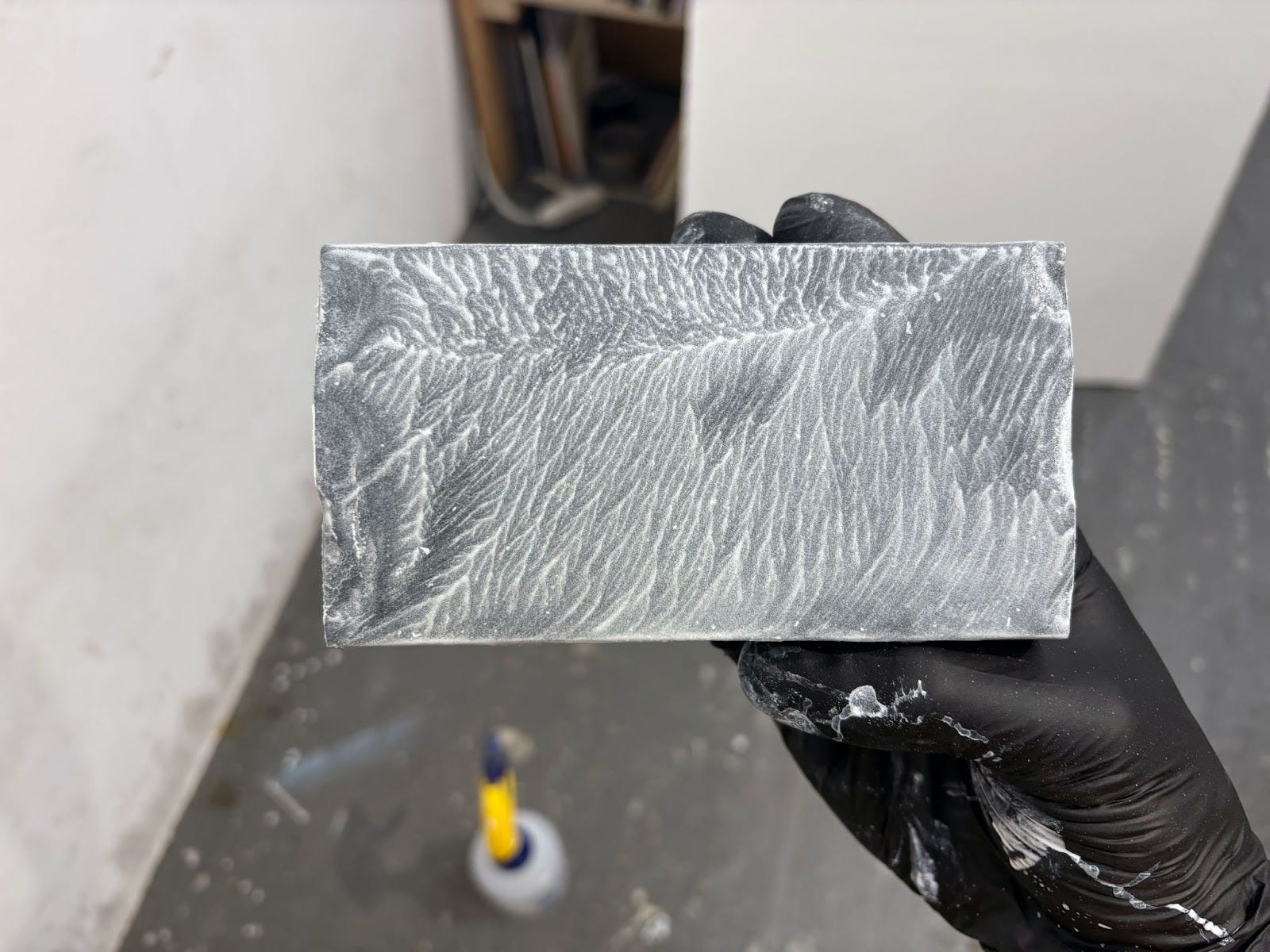
All the small particles that would otherwise be dispersed into the air are instead trapped in the slurry and pushed across the surface, filling in the small holes left from the application process. Wait for the surface to dry and then repeat this process with a lower grit sandpaper until you have achieved your desired level of smoothness.
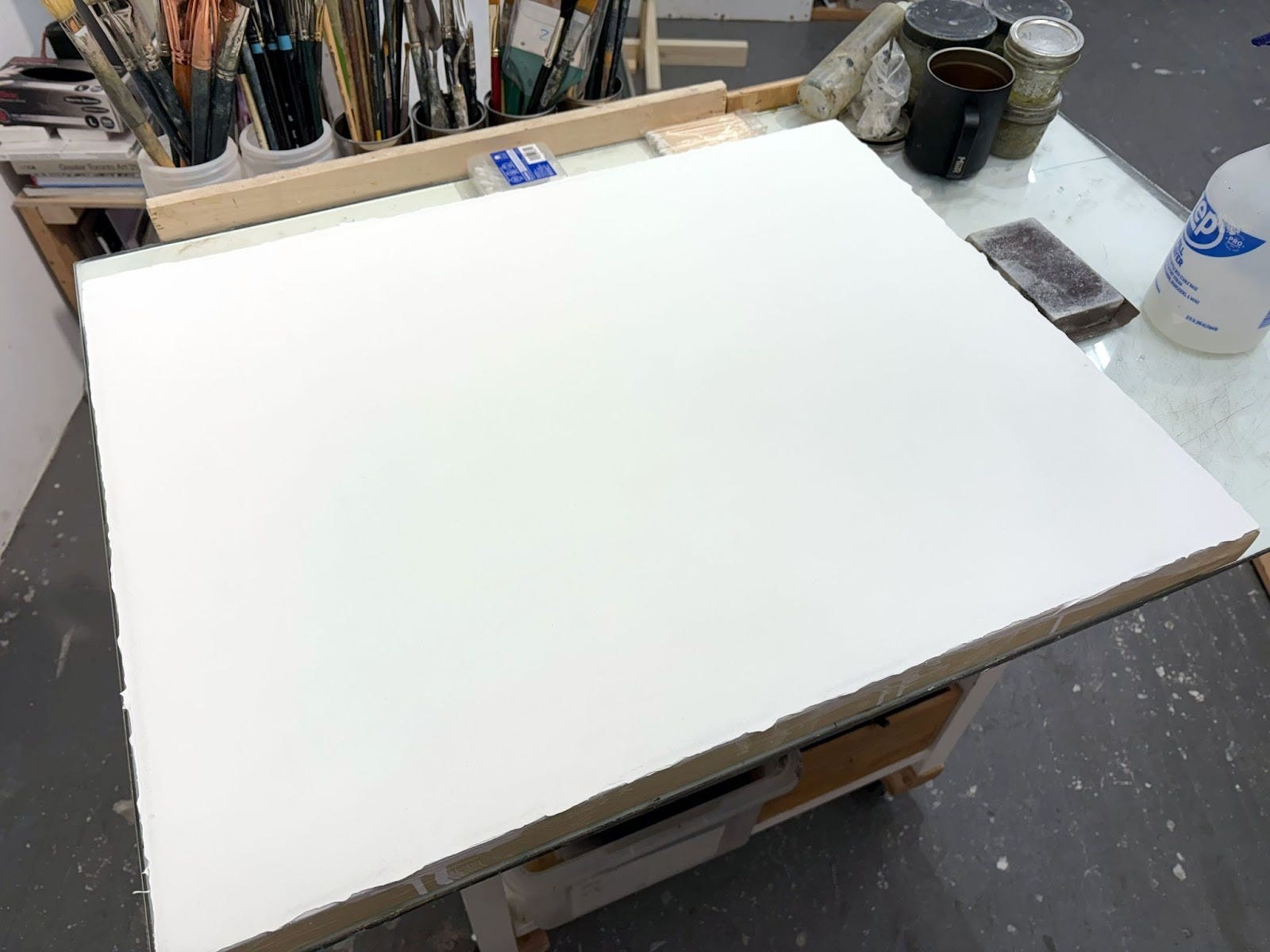
Now the molding paste ground is complete, and you can begin the process of painting.

James Warren (b. 1999) lives and works in New York. He received a BFA from the Rhode Island School of Design in 2022 and has exhibited in New York, Brooklyn, and Providence, RI. In 2025, he was a participant in the Land Arts of the American West program at Texas Tech University, researching and making in the American Southwest. Working primarily with painting, drawing, and photography, his work is concerned with dialectical landscapes—where natural forces and human intervention intersect. He is interested in the possibility of image-making as something which can not only depict the built environment, but also influence, construct, and become a part of it.